
Like Us. Subscribe. Pass It Forward. https://www.youtube.com/watch?v=ooqyMx5ddh4
Matthew Hitechew is the Dean of Arts & Sciences at Mayland Community College in Spruce Pine, NC, and a historian of Appalachian Studies. Matthew speaks about the language, culture, and linguistics of Appalachia.
Matthew brings the unique perspective of an Appalachian native whose family has lived in these mountains since the 1750s. Matthew's students often hear him explain how isolated communities in the High Country retained dialect and customs from the old world longer than other parts of our young nation. For instance, elementary students in the High Country celebrated May Day by dancing around a traditional twenty-foot-tall Maypole until the 1970s.
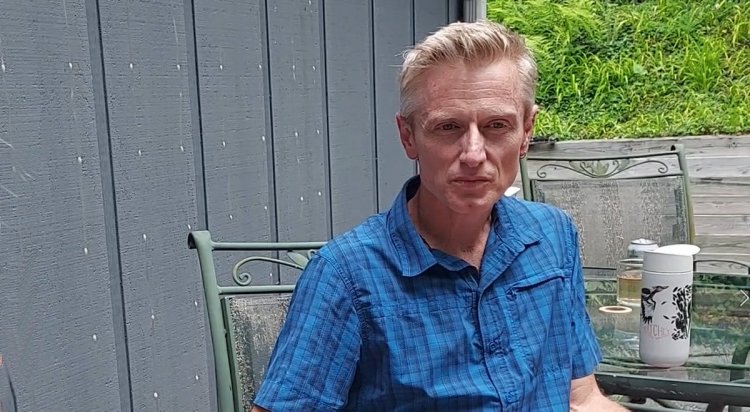
If you eavesdropped on Matthew's classroom, you might hear the complex, rich regional dialect linguists call Appalachian English being spoken. This is far from "incorrect" grammar — it is a highly structured, rule-governed linguistic variety with deep historical roots. Just like the customs from the old world, historically isolated communities preserved the older features of their language while independently developing unique vocabulary and grammatical patterns: a-prefixing, as in "He went a-hunting," or the word-final "t" that transforms cliff into "clift" and twice into "twicet".
Some people say Appalachian English puts a little mountain step between syllables. Others claim it's mountain cadence perking up a sentence. Take this line: "Once he came down the ridge, things got better." Slip in some mountain cadence and it becomes: "Wunst he come down off'n that ridge, things got better by a mile."
While Matthew uses his podium so his students can occasionally experience Appalachian English, he explains that a linguistic process called dialect leveling has reduced the differences between dialects. When speakers of different dialects interact, distinctive local features fade, and the dialects grow more alike.
Matthew argues that when good roads, radio, and television reached the High Country, the leveling process extended to every part of mountain culture. He said, "My grandmother never went beyond second grade. But once she got a TV, it stayed on all day, every day — and I am convinced that is why she insisted I go to college."
Now go ahead, click on this link and watch the ride-about with Matthew.
Become a ride-about partner by subscribing to our channel. Think of it this way: subscribing puts you in our backseat on every ride-about.
Like Us. Subscribe. Pass It Forward. https://www.youtube.com/watch?v=ooqyMx5ddh4